Table of contents
Opening a hair salon in the UK asks for less paperwork than most founders fear and more planning than most of them budget for. No national licence stands between you and the first cut, but tax, insurance, chemical safety and a price list that really covers your chair time all have to be settled before the doors open.
This guide follows the order in which the questions arrive: what the law expects of a hairdresser, which offices you deal with and when, what the premises and the colour bar need, how to work out a price for each service, and how to fill the column in the first weeks. Where England, Wales, Scotland and Northern Ireland part ways, the text names the nation.
The legal statements come from legislation.gov.uk, GOV.UK and the Health and Safety Executive (HSE) and were checked in September 2026. Treat each one as the starting point for a conversation with the office concerned, because rules and thresholds change. This guide does not cover Ireland.
1. Qualifications: what the law asks of a hairdresser
The statute that deals with hairdressers' qualifications is the Hairdressers (Registration) Act 1964. It created the Hairdressing Council, which today works as the Hair and Barber Council, and a register of hairdressers for people "who apply in the prescribed manner to be so registered". State registration is voluntary, as the Council itself says while it campaigns to make it compulsory, and the Act does not extend to Northern Ireland. We have found no UK law that makes a hairdressing qualification a condition for cutting, colouring or styling hair for payment.
So competence is something you prove to your clients, your insurer and your team rather than to a licensing office. Ask your insurer which qualifications and training its cover assumes, especially for colour, lightening and chemical straightening. Keep a written note of who on the team is trained for which services. And follow each colour manufacturer's instructions to the letter, including any skin allergy test they require before a colour service, then record the date of that test.
The law does step in as soon as you employ someone. An employer pays at least the National Minimum Wage; apprentices have their own rate if they are under 19 or in the first year of their apprenticeship, and GOV.UK lists the current figures, which change every April. A workplace pension has to be in place for eligible staff from the day your first employee starts. Before anyone starts, you must check that they are allowed to work in the UK, and GOV.UK warns of a civil penalty for employing an illegal worker without a correct check.
Where the law asks for no certificate, your routines and your records are what clients end up trusting.
2. Registration, tax and insurance: the offices in order
HMRC or Companies House. As a sole trader you can start trading straight away, but GOV.UK says you must register for Self Assessment if you earn more than £1,000 in a tax year, and HMRC must hear from you by 5 October after the end of the first tax year for which you need to file. A limited company registers with Companies House before it trades; directors may first need to verify their identity through GOV.UK One Login, and the company is usually set up for Corporation Tax in the same step. VAT follows turnover: you must register once your taxable turnover over the last 12 months goes over £90,000, or as soon as you expect to cross that line within the next 30 days.
The council. In England, GOV.UK says you may have to register a hairdressing or barbers business with your local council so that it can check you are following health and safety rules, and the council may inspect before issuing a certificate that you then display. In England and Wales, councils can also make byelaws under section 77 of the Public Health Act 1961 on the cleanliness of the premises, of the instruments, towels, materials and equipment, and of the hairdressers themselves. In Scotland and Northern Ireland, ask the council's environmental health team what applies locally. Planning permission and business rates are council matters too: in England and Wales, business rates are charged on most non-domestic property and relief schemes can reduce the bill, while Scotland and Northern Ireland handle rates differently.
Insurance and data. Employers' liability insurance is compulsory as soon as you become an employer, with cover of at least £5 million from an authorised insurer; in Great Britain the duty comes from the Employers' Liability (Compulsory Insurance) Act 1969, in Northern Ireland from a 1972 Order. Display the certificate where staff can see it. Public liability cover is not part of that Act, but GOV.UK lists it among the matters local byelaws for hairdressers may deal with. Finally, a salon that keeps client records uses personal information, and the ICO says organisations, sole traders included, must pay a data protection fee unless they are exempt; its online self-assessment tells you which case applies.
3. Premises, basins and the colour bar
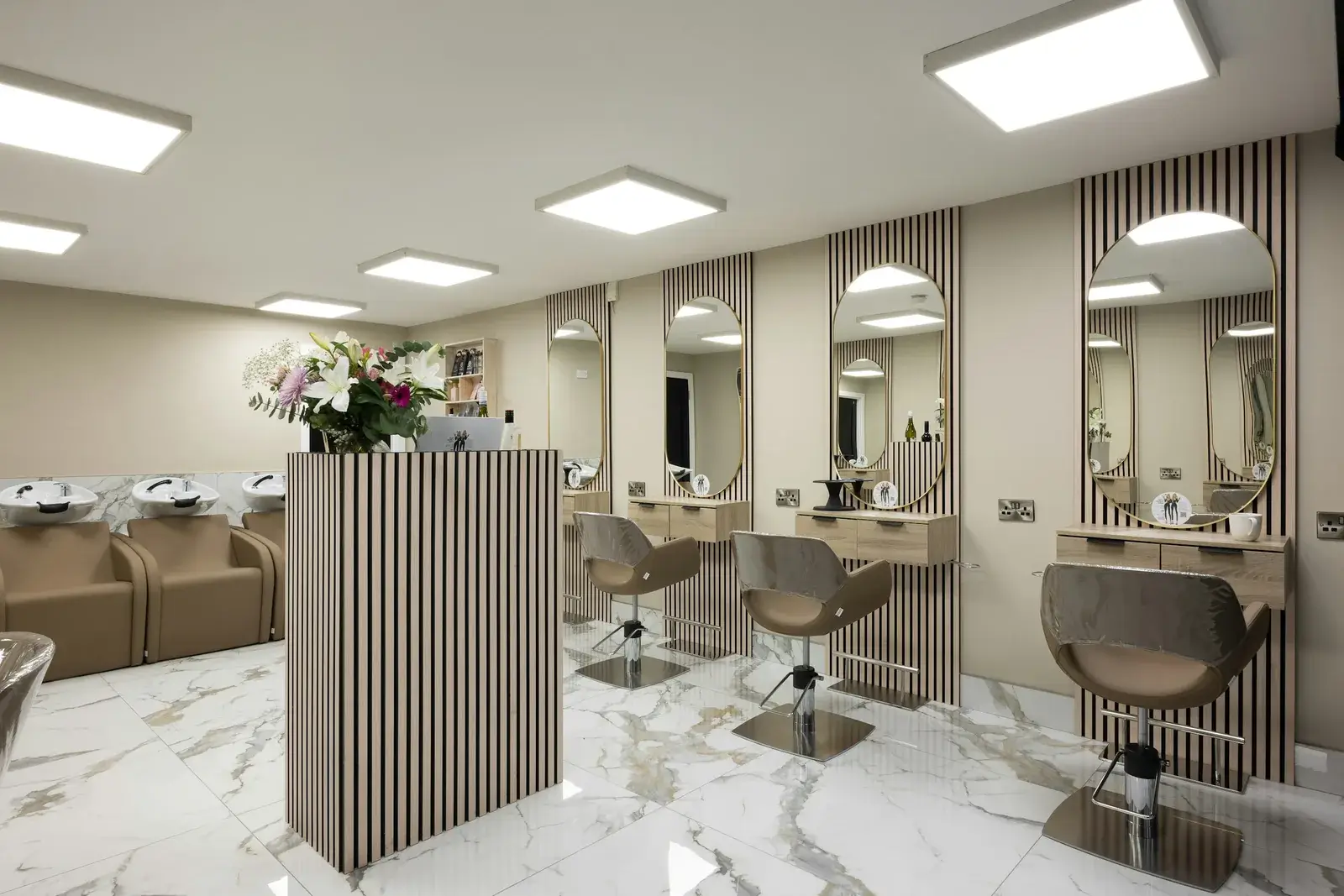
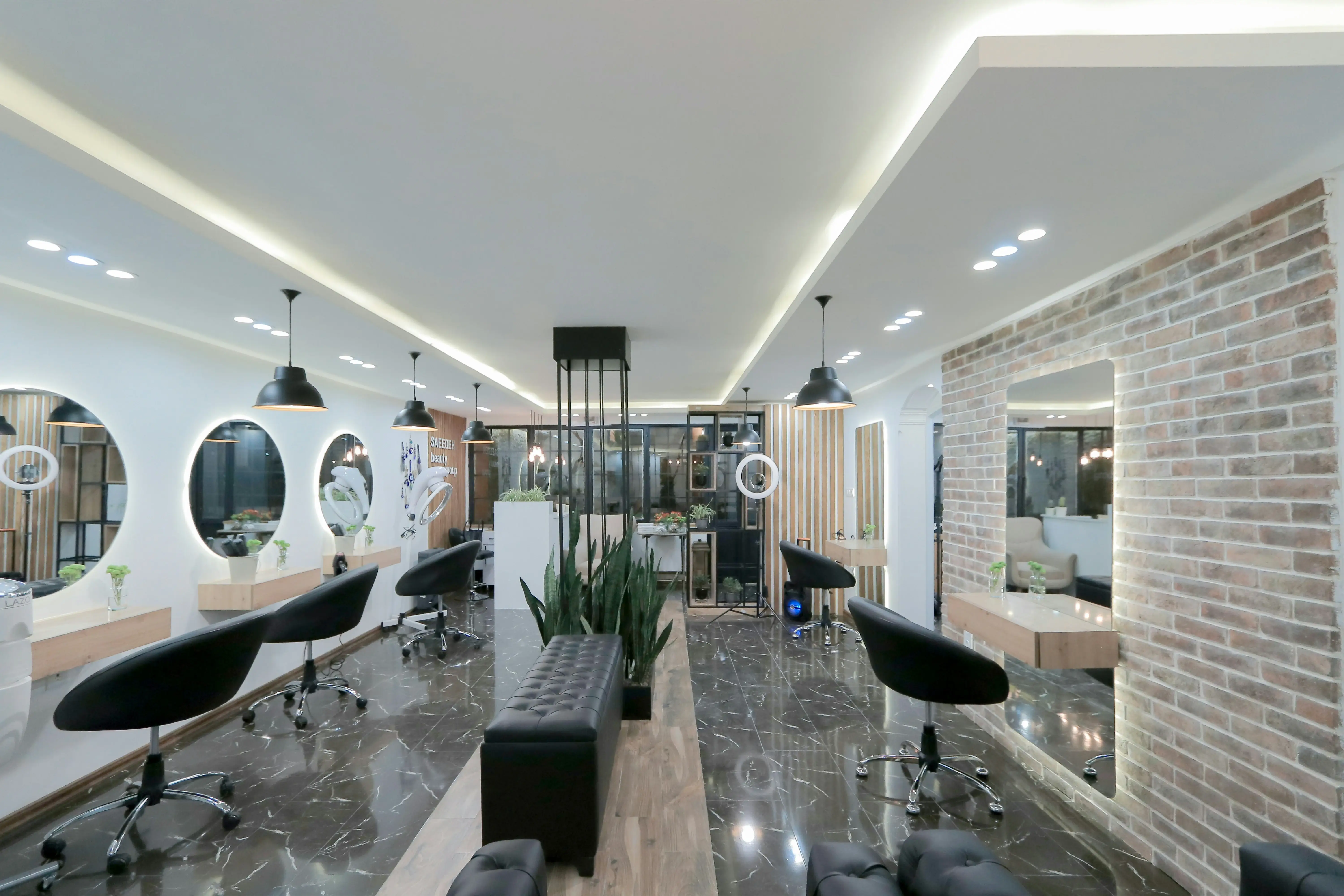
A hair salon is a wet workplace, and that shapes the premises more than the décor does. Before signing a lease, check three things with the landlord and a plumber: whether the drainage and hot water supply can carry several backwash basins running at once, where the colour mixing area can sit with good ventilation, and whether your use of the unit needs planning permission, which the council's planning team can confirm.
HSE's COSHH sheet for hairdressing (SR11) is the practical checklist for the colour bar. It notes that skin contact with some products may cause dermatitis, that prolonged wet work can lead to it, and that dusty ingredients such as persulphates and henna may cause asthma. Its controls are plain: keep the workplace well ventilated with a through draught, choose granules, pastes or solutions over dusty powders where you can, mix only as much as you need straight away, store products in a cool, dry, dark and ventilated place, and provide protective gloves, with single-use nitrile gloves named as acceptable. HSE also says employers are required to carry out health surveillance if workers use a product labelled 'May cause sensitisation by skin contact', and should consult an occupational health professional in that case. Check your colour labels for that phrase.
Hygiene between clients is the other daily routine. A workable standard: combs, brushes, scissors and clips cleared of hair and disinfected after every client, towels and gowns changed, basins cleaned daily, and hair swept up after each cut. Write those routines down with the products and contact times you actually use; the hygiene plan template has a hair salon version you can adapt, print and go through with your team.
Related articles
4. Costs and pricing: what a chair hour really costs
Separate the money you spend once from the money you spend every month. One-off costs usually include the lease deposit and legal fees, fitting out (plumbing, electrics, flooring, lighting), basins, chairs, dryers and mirrors, the first stock of colour and retail products, tools, signage, and the first insurance premiums. Running costs include rent, business rates, energy and water, which a salon with several basins uses heavily, wages with employer's National Insurance and pension contributions, colour and care products, towels and laundry, card payment fees, software, insurance, training, and a reserve for repairs.
The figure that turns these costs into prices is the cost of one productive chair hour. Add up the monthly running costs, including a realistic wage for yourself, and divide them by the hours in which a chair is actually occupied by a paying client, not the hours the salon is open. Gaps, cancellations and admin time all shrink that divisor, so estimate it cautiously and correct it after the first months.
A service price then has three parts: its duration multiplied by the cost per chair hour, the product it uses, and your margin. Colour needs the most care. If the chair is blocked during development, the whole appointment counts as chair time; if you can start another client meanwhile, only the active minutes do, but then the diary has to be planned for it. Weigh the colour you mix for a few weeks to find your real product cost per service instead of guessing it. And plan for VAT: once registered, you must charge it on the services you sell, so a salon approaching the threshold should decide in advance whether prices rise or the margin absorbs it.
5. First clients: Google, a booking page and records that remember
Set up your Business Profile on Google as soon as you have the keys: exact address, opening hours, the category that fits a hair salon, and photos of real work rather than the empty salon. Link it to one place where people can book. A booking page of your own lets clients choose the service and the stylist and see a genuinely free slot. Enter every service with its true duration, including development time for colour, or the diary will mislead you. How to lead Google, Instagram and recommendations into that one path is covered in online booking for hairdressers.
Each booking should trigger a confirmation straight away and a reminder before the day, with an easy way to cancel or move the appointment; the appointment confirmation and reminder templates give you ready wording. Newsletters and offers are a different matter: the ICO's rules on email and text marketing require consent or, for your own clients and similar services, a clear chance to opt out when you collect their details and in every message.
The client record is where a salon's quality becomes repeatable. Note the colour formula and development time, the date of the last skin allergy test, and anything the client told you about allergies. That last item is data concerning health, a special category under Article 9 of the UK GDPR, so ask for the client's explicit consent before you record it and keep it where only the team can see it. The visit dates in the same records show who comes back on their usual schedule and who has quietly stayed away, and our article on customer loyalty programmes for hairdressers turns that into ideas you can run yourself, such as rewarding the next appointment booked before the client leaves. A printable client record card works from day one; later, salon software such as Salon Wizard or another system can hold records, online booking and reminders together, and the page on software for hairdressing salons sets out what to look for.
First, decide the legal form and the name, register with HMRC or Companies House, and ask your council whether registration or byelaws apply to a hair salon at your address. Second, before the fit-out is final, walk the premises with HSE's hairdressing sheet in hand: basins, ventilation, colour storage, gloves and a written hygiene routine, and arrange employers' liability insurance before anyone starts work for you.
Third, calculate your cost per productive chair hour and build the price list from it, then open the booking page and your Google profile a few weeks before the first appointment, so that the column is not empty on the day you open.
Online booking for your salon?
Win more customers and reduce no-shows with your own booking page for hairdressers.