Table of contents
A barbershop lives on short services, a steady stream of regulars and people who simply walk in. That rhythm shapes almost every decision in opening one: who works the chairs and on what terms, how blades are handled between clients, what a quick clipper cut must earn, and how appointments and walk-ins share one day.
The legal side is lighter than in many trades, but it is not empty, and it differs between England, Wales, Scotland and Northern Ireland. This guide goes through qualifications, the offices you register with, the shop and its hygiene, the arithmetic behind a price list, and the first months of filling the chairs.
Statements about the law are taken from legislation.gov.uk, GOV.UK, HMRC and the Health and Safety Executive as they stood in September 2026. Where no rule could be found, the text says so rather than guessing, and points you to the office that can answer for your address. The guide is written for the UK only.
1. Qualifications: what a barber needs by law
Barbering sits under the same statute as hairdressing. The Hairdressers (Registration) Act 1964 set up a register that is now run by the Hair and Barber Council, which describes state registration for hairdressers and barbers as voluntary; the Act covers England, Wales and Scotland but not Northern Ireland. A registered barber may promote themselves as a State Registered Barber, yet we have found no UK law that requires a barbering qualification before you open a shop or cut for money.
The questions that matter legally come from the way barbershops are staffed. Many shops mix employed barbers with self-employed barbers who rent a chair. Which of the two a person is depends on the real working arrangement rather than the label on the contract: who decides the hours, who sets the prices, whose clients they are, who supplies the tools and products, and how they are paid. HMRC's Check employment status for tax (CEST) tool gives HMRC's view based on answers like these, and HMRC says it will stand by the result as long as the information you give is accurate. Status decides who is responsible for working out and paying the tax and National Insurance due, so run the check for each arrangement before the first chair is let.
For barbers you employ, the ordinary employer duties apply: the National Minimum Wage, a workplace pension for eligible staff from the first day, a right to work check before they start, and health and safety. HSE's key messages for hairdressers are just as relevant to the wet work in a barbershop: they warn that frequent contact with water and shampoo can irritate the skin and lead to dermatitis, and they advise disposable non-latex gloves for shampooing and colouring, changed between clients.
In a barbershop, the terms on which someone works a chair are a bigger early decision than the chair itself.
2. Registration, tax, insurance and the licences people forget
Start with HMRC. A sole trader has to register for Self Assessment once earnings pass £1,000 in a tax year, and a limited company must be registered with Companies House before it trades. Barbers who rent your chairs as self-employed people register with HMRC themselves. Two thresholds follow you as the shop grows. VAT registration becomes compulsory when your taxable turnover in the last 12 months goes over £90,000. And Making Tax Digital for Income Tax is being phased in for sole traders: it applies from April 2026 where qualifying income was over £50,000 in the 2024 to 2025 tax year, from April 2027 above £30,000 and from April 2028 above £20,000, which adds digital records and quarterly updates to the yearly tax return.
At the council: in England, GOV.UK says you may have to register a barbers business so that the council can check health and safety, and in England and Wales, section 77 of the Public Health Act 1961 lets councils make byelaws on the cleanliness of barbers' premises, instruments, towels and equipment and of the barbers themselves. If you offer more than hair and beard work, check again. In English council areas that have adopted the 1982 rules, cosmetic piercing needs registration; in Wales, body piercing including ear piercing is a special procedure that needs a personal licence and an approved premises certificate; and in Scotland, a business providing cosmetic body piercing needs a skin piercing licence from the council.
Two further items are easy to miss. If music plays in the shop, GOV.UK says you usually need a licence to play recorded music at your business, and that includes background music from the radio. And insurance: employers' liability cover of at least £5 million is compulsory from your first employee, in Great Britain under the 1969 Act and in Northern Ireland under a 1972 Order, with the certificate on display. Keeping client details also brings the ICO data protection fee, which organisations using personal information must pay unless they are exempt.
3. The shop, the blades and the hygiene routine
Barbering needs less plumbing than a colour salon but more attention to sharp edges. The layout questions are how many chairs the room carries with enough space to work round each one, where waiting walk-in clients can sit without blocking the door, and whether there is a basin close enough for washes and hot towels. Check with the landlord that the electrics can run clippers, trimmers, dryers and a towel warmer at every station at the same time.
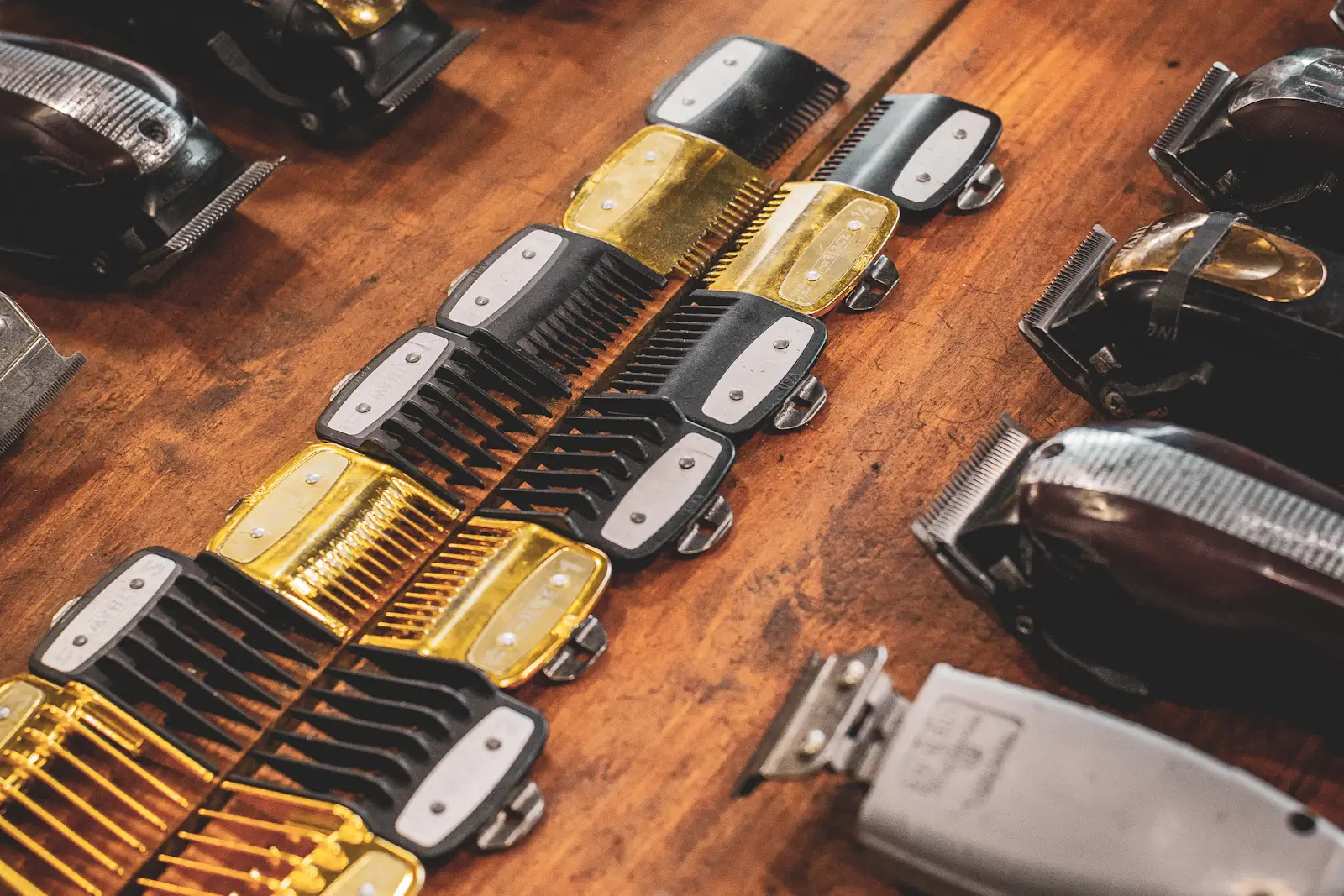
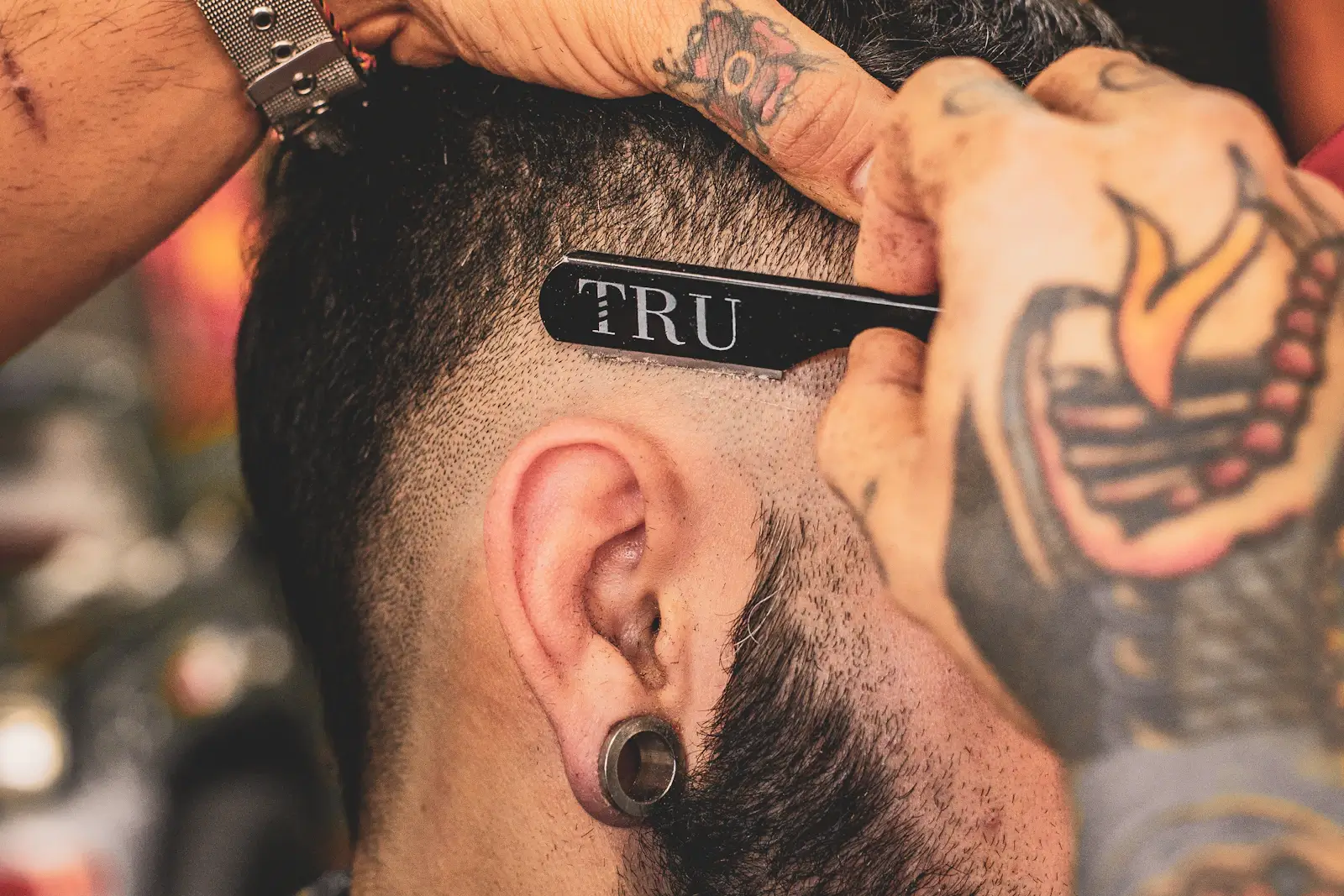
The straight razor is where a barbershop's hygiene is judged. A workable routine: a fresh disposable blade for every client and the handle disinfected; clipper blades and attachments cleared of hair and disinfected after each cut with a product suitable for metal and plastic; combs and brushes disinfected and stored dry; towels changed after every client and washed hot enough to disinfect. A nick during a shave means gloves, a clean dressing and a note in the book, and used blades go straight into a closable, puncture-resistant sharps container. Enter your actual products and contact times in the hygiene plan template, whose hair salon version includes rows for razors and clippers, and go through it with every barber, chair renters included, because a client cannot tell who is employed and who is not.
For the products, HSE's hairdressing guidance applies here too: keep the shop well ventilated, wear gloves for any colouring such as beard dye, dry hands thoroughly and moisturise often, and check the skin regularly for early signs of trouble. HSE's hairdressing sheet also warns that the disinfectants barbers keep combs in can irritate the skin and eyes, so handle them with the same care as colour.
Related articles
4. Costs and pricing: short services, full chairs
The cost categories are familiar: one-off spending on the fit-out, chairs, mirrors, stations, clippers and trimmers, a disinfection and storage setup, signage and the first stock; and monthly spending on rent, business rates, energy, wages or your own drawings, products, laundry, blades and other consumables, insurance, card fees, software and the music licence. What is different in a barbershop is the size of each sale. With services measured in minutes rather than hours, idle time between clients weighs heavily on the margin.
Work out your price floor per service like this. Divide the monthly costs of the shop by the number of chair minutes in which someone is actually being cut, not the minutes the shop is open, then multiply by the length of each service and add the consumables it uses. The divisor is the hard part: a walk-in shop has quiet stretches mid-morning and queues after work, so count your first weeks honestly instead of assuming every chair is always busy. Your price has to sit above that floor with enough margin to carry the weeks that turn out slower than planned.
If you rent chairs, the arithmetic changes on both sides. Your rent income is fixed while the renter's takings vary, so set the rent from what the chair costs you to provide, including a fair share of rent, energy, laundry and reception time, and write down what it includes: products, towels, the booking system, the use of the shop's name. Remember that a renter who sets their own prices and keeps their own client list looks more self-employed than one who works to your menu, which is one more reason to settle status before you print the menu. How to present services with durations and add-ons clearly is covered in structuring barbershop services online.
5. First clients: walk-ins, appointments and regulars
A new barbershop is found in two ways: people walk past it, and people search for a barber nearby. For the second, set up your Business Profile on Google with exact opening hours, including late evenings if you open them, and say whether you take walk-ins, appointments or both. Photos of fades and beard work do more for you than a picture of the empty shop.
Most shops end up with a mix, and the mix needs rules rather than improvisation. Decide which chairs or which hours stay free for walk-ins and which are bookable online, and show both on your own booking page so that people who prefer certainty can have it. How protected walk-in windows and a waiting list work together is explained in walk-ins, waiting lists and online planning. Every online booking should produce an immediate confirmation and a reminder before the appointment, with a simple way to cancel; the confirmation and reminder templates give you wording to start from.
Regulars are the core of a barbershop, and many come back on a fixed rhythm. A short record per client keeps that rhythm alive when their usual barber is off: clipper grades and guard lengths, how the neckline is finished, beard shape, any skin irritation after shaving, and the date of the last visit. The client record card template covers this on paper. When paper stops scaling, barbershop software can combine the booking page, reminders and records; Salon Wizard is one such option, and software for barbershops lists what matters when you compare systems. Whatever you use, agree in writing with chair renters whose clients' details are whose, and who answers when a client asks what the shop holds about them.
First, decide who will work your chairs and on what terms, and run HMRC's employment status check for every arrangement before anyone starts. Second, register the business, ask your council about registration and byelaws, and put employers' liability insurance, the music licence and the ICO fee in place.
Third, calculate your price floor from real chair minutes, fix your rules for walk-ins and appointments, and open the booking page and Google profile before the shop opens its doors, so that the first regulars can already book their next visit.