Table of contents
Hygiene in a salon rarely fails on knowledge and almost always on the fact that nobody has decided when it happens. This article translates the hygiene plan into three cycles – after every client, after every shift, once a week – and shows where they get stuck on a busy day.
There is no disagreement about cleanliness in a hairdressing salon. Everyone in the trade knows that tools belong disinfected after every client and laundry belongs washed hot. The distance between that knowledge and a full Saturday afternoon is nevertheless large, and it has a sober reason: a good intention has no point in time.
So this article describes the form and not the values. The binding figures – temperatures, contact times, approved agents – are in your business's hygiene plan and in the requirements of the authorities responsible for you; they belong read off there and not taken from a guide. What follows here is the question after that: at which point of the day those figures turn into an action that still happens when three clients are waiting.
1. From good intention to schedule: three cycles instead of one list
Every hairdressing business has a hygiene plan, and in many salons it hangs where nobody reads it. That is rarely negligence, but a consequence of the form: a plan describing what applies says nothing about when somebody does it. Hygiene only becomes effective when every task hangs on a point in time – on a client, on a shift, on a weekday.
So translate the plan into three cycles. The first runs after every client and takes seconds to a few minutes. The second runs at the end of a shift. The third runs weekly and covers what nobody touches daily. Every task belongs in exactly one of those three cycles, and whatever fits into none of them does not get done in everyday work.
One point is regularly overlooked: the concrete figures – washing temperatures, contact times, replacement intervals, approved agents – are set neither by the salon nor by a guide. They are in your business's hygiene plan and in the requirements of your trade association and the public health authority responsible for you. Enter the values from there into your schedule; this article supplies the structure, not the numbers.
What hangs on no client, no shift and no weekday does not happen in a busy salon.
2. Tools: the cycle after every client and the one at closing time
Scissors, combs, brushes and clipper heads have the closest contact and the shortest cycle. The first cycle is aimed at them: remove hair, clean, disinfect – with an agent approved for the purpose and for the time stated for it. Rinsing under running water is not disinfection but cleaning. The order is right in that case, but the second step is missing.
For this cycle to run in the business at all, it needs two sets of tools per station. With only one set you have to wait between two clients – and waiting is the reason steps get skipped. The second set is therefore not a question of equipment but the precondition for your plan holding up on a busy day.
A special case is equipment that cannot be immersed: trimmers, hairdryers, straighteners, powered clipper heads. The plan needs its own line for them, otherwise they quietly drop out. Removable parts are treated separately, housings are wipe-disinfected, and for the blades the manufacturer's instruction applies and not your own habit.

3. Laundry and capes: the cycle that must never stall
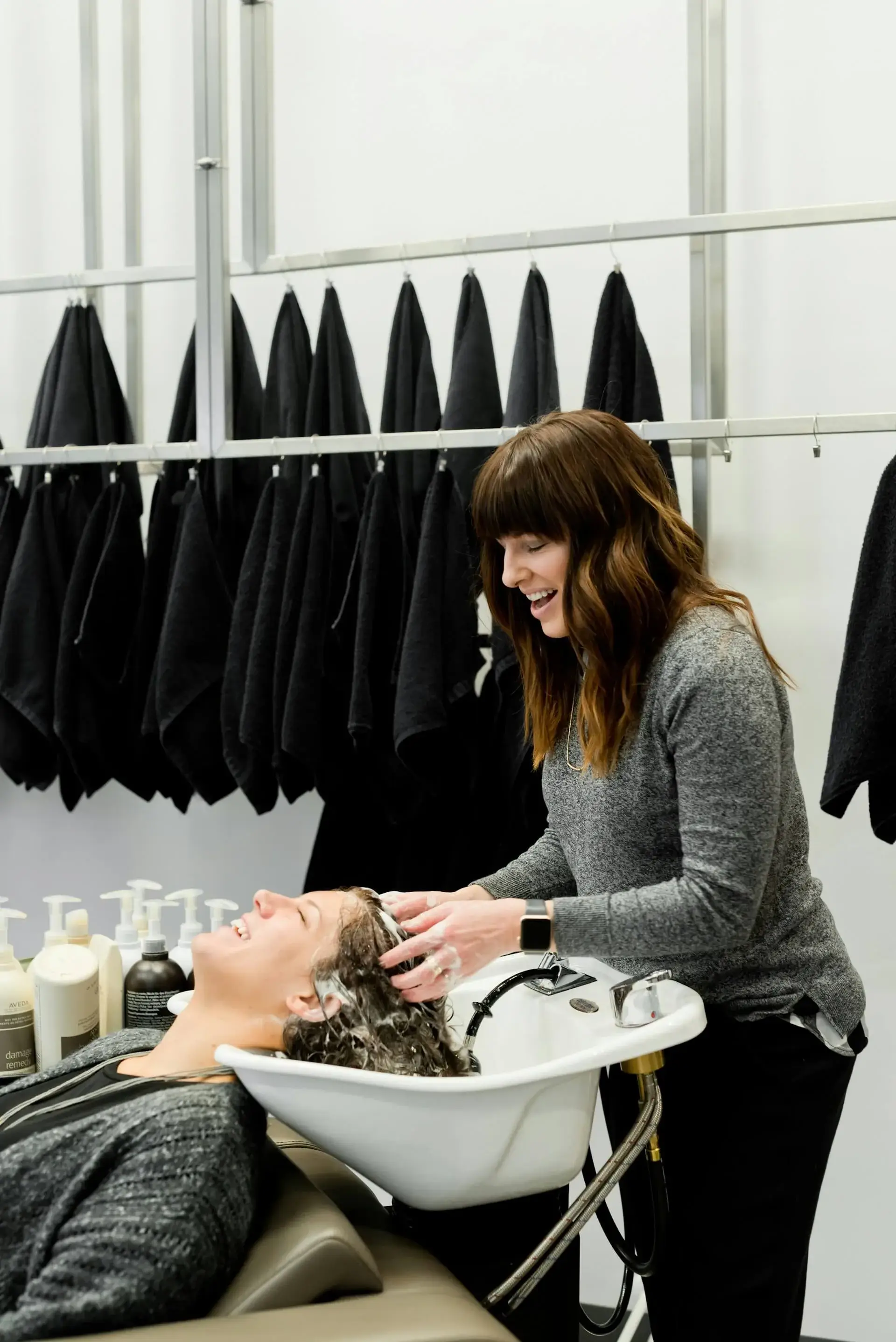
Capes and towels are the second contact point with a short cycle, and they are where corners get cut soonest – not out of intent, but because the pile is empty. A fresh towel per client can only be sustained if enough laundry is in circulation to get through a full Saturday without somebody having to start a machine in between.
The washing temperature is one of the figures the salon does not set. At least 60 degrees Celsius is common; what is binding is what stands in your hygiene plan and what the authorities responsible for you require. More important than the number is that nobody has to improvise anyway: a machine equal to the volume, and a place for used laundry that is clearly separated from the place for the fresh.
Work the cycle through once for your busiest day. How many capes and towels does that day need, how many wash cycles is that, and who starts them when? That calculation answers the question of whether your standards are carried by good intentions or by equipment. Often it is not the discipline that is missing, but the third set of capes.
4. Surfaces and the wash station: the places nobody thinks of
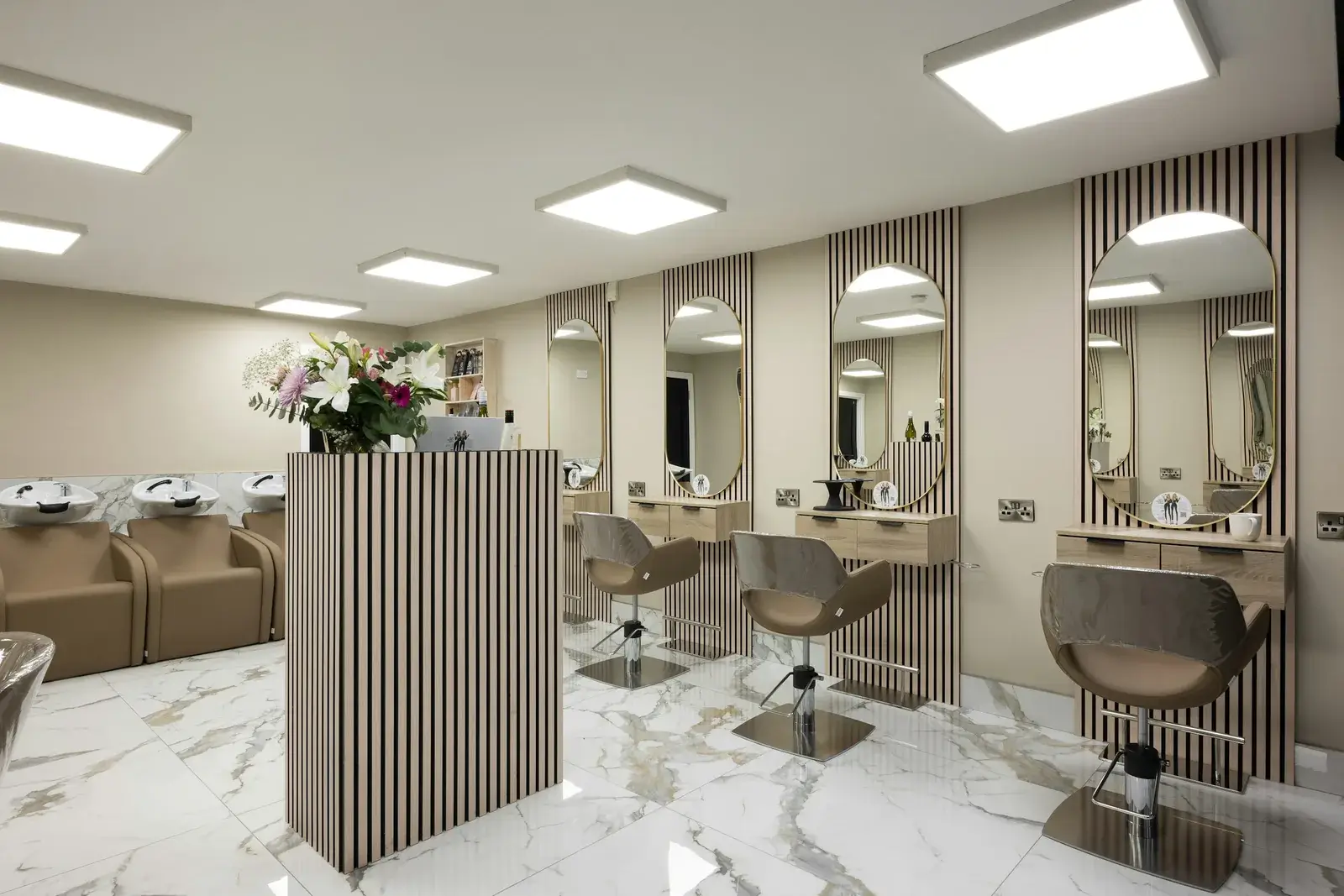
The floor gets swept because you can see it. The surfaces that actually get touched are less conspicuous: armrests, the height adjustment on the chair, the shelf under the mirror, the card reader, door handles and the toilet handle. They belong in the shift cycle, and in a fixed order, so that nobody has to guess what has already been done.
The wash station deserves its own consideration. Neck rest, basin rim, shower head and hose have skin contact and stand permanently damp – that is the combination most likely to become a problem in a salon. For the neck protection the same applies as for towels: per client, not per day.
And then there are the areas no client ever sees and which nevertheless tip the balance: the colour store, the shelf behind reception, the team's break room. If there is permanent disorder there, it migrates to the front, because cleanliness as a habit stops at no door. For this area the weekly cycle is enough – provided a name is assigned to it.

5. What clients see – and why cleanliness cannot be explained
Clients judge hygiene by a few signs, and not one of them is a certificate. They are the floor between two appointments, the comb that visibly comes out of a clean container, the fresh cape taken up in front of their eyes, and the state of the toilet. Get those four right and you do not have to talk about cleanliness at all.
That is also why explanations backfire easily at this point. A notice assuring people of your own cleanliness draws attention to a question that would not otherwise have been asked. Showing works, asserting does not – and the showing costs you nothing, because it sits in the routine anyway.
Where information does make sense: with clients who have a concrete reason, such as a skin condition or an ongoing treatment. Here a calm, factual description of what your business actually does helps more than any general assurance. If the question concerns the treatment itself, it belongs in the consultation – and only as far into a note as the treatment requires.
Hygiene in a hairdressing salon rarely fails on knowledge and almost always on the form: what hangs on no client, no shift and no weekday does not happen on a busy day. So translate your hygiene plan into three cycles, equip it so that it holds on a Saturday too, and read the binding values off where they are set for your business – not in a guide. What clients see of it then follows by itself.
Online booking for your salon?
Win more customers and reduce no-shows with your own booking page for hairdressers.